

Ditching Plastic & Hexacomb: The Operational Cost of Outdated Roll Cradle Packaging
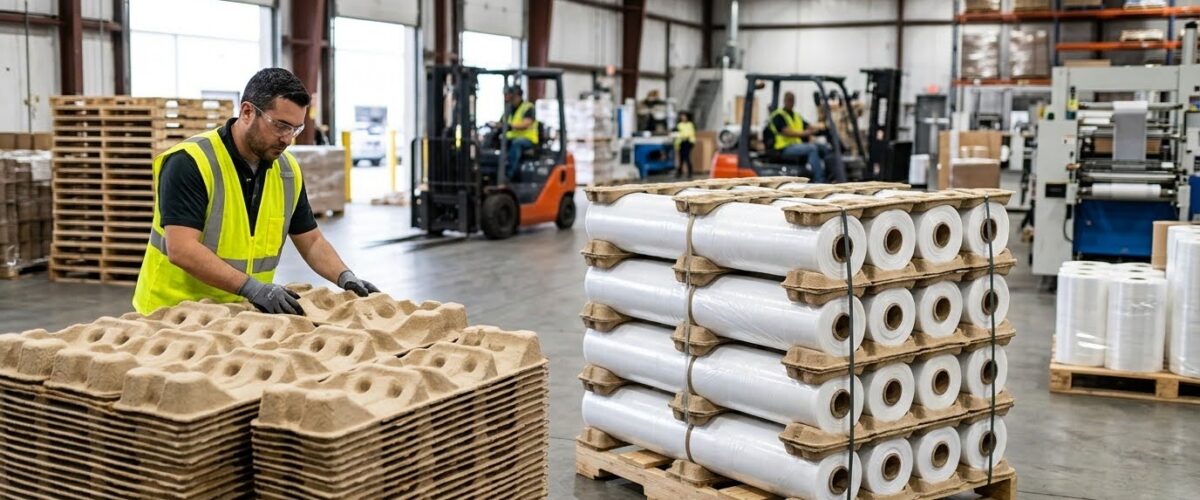
When shipping heavy cylindrical goods—such as paper, film, non-wovens, textiles, or specialized industrial materials—the packaging you choose to stabilize your rolls in transit isn’t just an afterthought. It directly dictates your damage rates, labor efficiency, freight costs, and sustainability footprint.
For years, manufacturers and logistics teams relied on legacy solutions like thermoformed plastic trays or die-cut corrugated/hexacomb blocks. While these materials were once the industry standard, today’s operational demands have exposed their hidden liabilities.
Here is a look at the true operational costs of outdated roll cradle materials—and why leading manufacturers are switching to heavy-wall molded pulp.
1. The High Cost of Material Waste & Hidden Freight Expenses
Thermoformed plastic and rigid hexacomb blocks present a major logistical headache: poor nestability.
- Excess Freight Volume: Because plastic trays and rigid hexacomb blocks do not nest tightly together, a significant percentage of every inbound shipping pallet is dedicated to transporting empty air. This drives up Less-Than-Truckload (LTL) and full-truckload shipping costs.
- The Molded Pulp Advantage: Heavy-wall molded pulp roll cradles are designed specifically for high-density nesting. By fitting significantly more pairs per pallet, manufacturers dramatically reduce shipping overhead and minimize the carbon footprint associated with inbound packaging transport.
2. Warehouse Footprint: Paying to Store Empty Space
Floor space in manufacturing plants and distribution centers has never been more expensive.
Storing pallets of bulky plastic cradles or rigid hexacomb assemblies consumes valuable square footage that could otherwise be used for revenue-generating inventory or production lines.
Because heavy-wall molded fiber cradles stack compactly into a tight, interlocked profile, they reclaim up to 50% or more of your warehouse floor space compared to non-nesting legacy alternatives.
3. Floor Labor & Packing Line Bottlenecks
In high-volume fulfillment environments, every second added to the packaging process multiplies labor costs:
- Hexacomb Assembly Friction: Hexacomb and die-cut corrugated roll supports often require multi-step folding, taping, or gluing to build structural integrity before a roll can be loaded.
- Plastic Handling Issues: Plastic trays can stick together or deform, requiring manual effort to separate on fast-moving packaging lines.
By contrast, single-piece molded pulp cradles arrive pre-formed, ready to lay directly on pallets or inside outer master cartons. They offer immediate drop-in stabilization, speeding up packing lines and reducing labor strain.
4. Protection & Structural Performance: Bracing Heavy-Wall Loads
A common misconception is that paper-based molded pulp cannot hold up to heavy industrial loads compared to plastic or hexacomb.
However, Type 1 heavy-wall molded pulp is engineered specifically for heavy industrial applications (frequently supporting loads from 10 to 100+ lbs per individual item or roll set).
- Vibration & Impact Absorption: Molded pulp inherently flexes slightly to absorb transport shocks and road vibrations—preventing core crush and surface marring on sensitive film or paper rolls.
- Rigidity Under Stacking: Modern molded roll cradles deliver superior blocking and bracing strength, ensuring multi-tiered pallet loads remain stable throughout international transit.
5. Disposal Liabilities & Corporate ESG Compliance
As corporate environmental mandates tighten and regulatory bodies penalize single-use plastics, packaging materials are subject to stricter scrutiny from end-customers:
- Plastic Cradles: Difficult to recycle locally, often ending up in landfills or creating disposal headaches for your customers.
- Hexacomb: Often combines paper fibers with plastic liners, waxes, or heavy adhesives, making breakdown and curbside recycling challenging.
- 100% Recycled Molded Pulp: Made from 100% post-consumer recycled paper, molded pulp cradles are fully recyclable, compostable, and biodegradable. They allow both you and your customers to effortlessly hit corporate zero-waste-to-landfill goals.
Make the Upgrade to Smarter Roll Protection
Sticking with legacy plastic trays or hexacomb blocks may feel safe, but the operational drag—higher freight bills, bloated warehouse storage, slower packing lines, and environmental penalties—adds up rapidly.
Upgrading to heavy-wall, nestable molded pulp roll cradles delivers rugged protection while directly improving your bottom line.